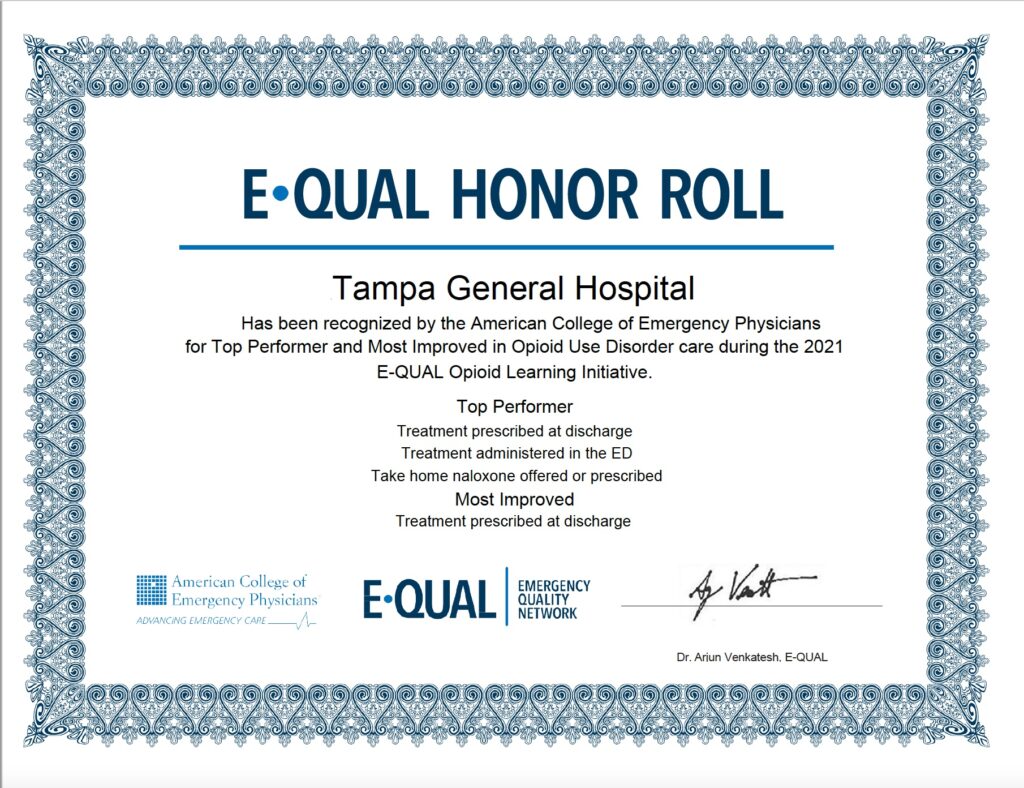
USF Social EM Section Selected Top Performer for Quality Care at Tampa General Hospital by ACEP E-QUAL
clinical emergency medicine, critical medical anthropology
Special thanks to PhD student Bree Casper who conducted 20 client interviews and assisted with the writing of the results.
In order to understand the broader impact the SSP is having on individuals and communities, we collected qualitative data through individual interviews with participants and program volunteers.
While the data is currently being analyzed, we (Romero-Daza, Rigg) present some of the preliminary findings below.
From November 19th, 2021 to January 7th, 2022 we conducted 20 semi-structured interviews with participants of IDEA Exchange Tampa across two exchange locations (University Mall and Ybor City).
Of participants interviewed, 45% identified as male, and 55% identified as female. Participants racial/ethnic breakdown included, 75% of participants who identified as white, 10% of participants who identified as Black, and 15% of participants identified as Hispanic.
Semi-structured interviews lasted between 10 and 30 minutes and engaged participants on the following topics: history of use and how they used to get safe injection supplies, experiences since joining the exchange program, and critiques of the program.
When referring to their past use, participants often noted that they got needles from “mom & pop” pharmacies (local, non-chain pharmacies who are willing to sell to people who inject), or by buying them from dealers and friends at an upcharge. Few participants were able to purchase needles and supplies online (through websites like Amazon). All participants learned about the exchange through word-of-mouth. When asked how the exchange has changed their use, most participants noted that the exchange made their use safer and they benefited from access to safe injection supplies (in addition to clean needles). As some participants noted in their interviews:
“It definitely made it [injecting drugs] safer… there has been lots of time where I had to reuse needles. You know, recently before I came here, I actually had one [needle] break off in my arm because it was so old and I just had to keep reusing it.”
“Before I would never use an alcohol swab or cotton. I would just kind of wing it and hope I don’t die. And the Narcan also just really helps. Narcan was always so hard to get. Someone would OD. You guys have probably saved so many people with Narcan.”
Many participants told deeply emotional stories about how the Narcan they got at the exchange saved themselves or their friends.
Participants have self-reported 1,350 reported overdose reversals to date. Referral services offered at the exchange (such as MAT treatment and HCV/HIV treatment) were noted and appreciated by participants, but not many had used the referrals offered to them at the time of the interview.
When asked if there was anything we could do better, participants noted that the only shortfall was the sometimes-inconsistent inventory experienced in the last three months of the year.
“The inventory…the first time I came you guys had a better variety.”
Finally, one of the standout comments from almost all participants was the community and lack of judgment they felt at the exchange.
“Y’all are discreet. You don’t make us feel like we are less than or any different then you guys.”
“You guys are very helpful, you offer needles, but you also offer ways to get in rehab…you guys are not judgmental. You guys are very welcoming.”
“You guys are there for us in a way that you don’t even understand you are… and that to me is the definition of selfless and admirable, and it only promotes positive public health effects, and I can’t see a negative to any of that.”
In addition, we conducted semi-structured interviews with five USF students who have volunteered their time to the SSP since its inception. The participants were all second-year medical students in their mid-twenties and included four who identified as female and one who identified as male. The responses from the volunteers echoed some of the themes that emerged in participant interviews, including the clear benefits of providing clean needles and other needed materials, and of offering Narcan to help reduce the number of potentially fatal overdoses.
Likewise, all the volunteers commented on the respectful and caring service provided by the staff that run the program.
“You can definitely see that when people come to the exchange they are treated like equals, they are never made to feel like they are less than anyone else just because they use drugs. You can see that they [staff] really care and are truly committed to the cause.”
Volunteers also highlighted the benefits their involvement in the SSP operations offers them as future medical doctors.
Notably, they mentioned that volunteering with the program has allowed them to get a better understanding of the complex nature of addiction and to put a “human face” to the statistics they often read about in their classes.
When asked about ways to improve the program, three of the volunteers mentioned the need to disseminate information about the services through various channels, including social media and through ads in utilitarian spots such as benches in public bus stops.
Table 1. Descriptive Statistics among IDEA Tampa Syringe Service Program Clients
| Characteristic | IDEA Tampa SSP (N=546) |
| Age (mean, SD) | 40.9 (10.2) |
| Gender | |
| Male | 313 (57.5) |
| Female | 228 (41.9) |
| Non-Binary | 3 (0.55) |
| Ethnicity | |
| Non-Hispanic | 362 (80.6) |
| Hispanic | 87 (19.4) |
| Race | |
| White | 464 (87.6) |
| Black/African American | 43 (8.1) |
| Asian | 6 (1.1) |
| Native American | 8 (1.5) |
| Multiracial | 5 (0.9) |
| Unknown | 4 (0.8) |
| Educational Attainment | |
| <8th grade | 20 (3.7) |
| Some High School (no diploma) | 68 (12.6) |
| High School/GED | 234 (43.4) |
| Some College | 134 (24.9) |
| College Degree | 57 (10.6) |
| Advanced Degree | 4 (0.7) |
| Vocational Training | 22 (4.1) |
| Housing Status | |
| Experiencing unstable housing | 229 (42.5) |
| Stably housed | 310 (57.5) |
| Substance Use (non-injection) | |
| Benzodiazepines | 42 (7.7) |
| Marijuana | 184 (33.7) |
| Cocaine | 50 (9.2) |
| Crack-cocaine | 49 (8.9) |
| Methamphetamine | 149 (27.3) |
| Barbiturates/Tranquilizers | 10 (1.8) |
| Pain killers | 19 (3.5) |
| Heroin | 65 (11.9) |
| Prescription Opioids | 33 (6.0) |
| Fentanyl | 37 (6.8) |
| None | 173 (31.7) |
| Other | 57 (10.4) |
| Substance Use (injection) | |
| Heroin | 341 (62.5) |
| Prescription Opioids | 49 (9.0) |
| Cocaine | 55 (10.1) |
| Methamphetamine | 263 (48.2) |
| Crack-cocaine | 16 (2.9) |
| Speedball (heroin/cocaine) | 24 (4.4) |
| Fentanyl | 157 (28.8) |
Table 2: Program-specific Metrics
| Number of individual participants served | 546 |
| Number of used needles and syringes received | 114,821 |
| Number of unused needles and syringes distributed | 113,991 |
| Syringe Return Ratio (>1 = more syringes in then out) | 1.01 |
| Number of persons receiving HIV testing | 187 |
| Percent testing HIV reactive | 2.7% |
| Number of persons receiving HCV testing | 178 |
| Percent testing HCV reactive | 44.4% |
| Number of naloxone doses distributed | 1243 |
| Number of overdose reversals performed | 1108 |
ACTIV-6 study to look at ivermectin, fluticasone furoate, and fluvoxamine
Link to ABC Action News Original Article
By: Jillian Ramos
TAMPA, Fla. — Tampa General Hospital and USF Health are part of a nationwide study that is looking at older medications to treat COVID-19.
“So ACTIV-6 is for those re-purposed drugs that have at least enough evidence behind them that says there might be a signal here that can help somebody, but more importantly, everything that has been done with them so far, there’s really not a signal for harm. And so to make it into the ACTIV-6 group of drugs that might be used, re-purposed, you have to at least meet that level of safety and possible efficacy against NIH study. So that means the bar is very high. The bar is very high for making sure we’re doing the study,” explained Dr. Jason Wilson.
The study will look at drugs (ivermectin, fluticasone furoate, and fluvoxamine) to see their impact on the omicron variant of COVID-19. The drugs will be taken in an outpatient setting, which means you won’t have to leave your house. Right now, there are no FDA-approved drugs to treat mild to moderate symptoms of COVID-19, which this study hopes to look at.
“We’re looking just like with vaccines, to see if we can keep people out of the hospital, or keep people from dying from COVID. And that’s really about the ACTIV-6 studies looking at prevention of hospitalizations by using repurposed drugs,” explains Dr. Wilson
Here are the qualifications you have to meet once you test positive for COVID-19 to participate in the study:
Once you enter the study, drugs will be sent to your house the next day. You will take them for a few days and the medical team will follow up for a month at different intervals of time. The communication will be via phone calls/mail. The drugs are free and you will be compensated $100.
“So the way this trial is designed, is that we’re going to capture thousands of people throughout the country. And we’re going to do it fairly quickly because there’s so many different trial sites. And it’s important to note too, that with ACTIV-6 some sites came online earlier, and some are just ramping up, like us. So the ones who came on earlier had some good tests around the delta variant. And as we come along, we’re getting a good test on omicron. The data we’re going to get it’s going to be really powerful for looking at that. But with four arms, meaning placebo, fluvoxamine, ivermectin, fluticasone. We got to have a lot of people in there to get good samples. So we’re hoping to enroll well into the hundreds in this area, and in the 1000s, in the state of Florida,” explained Dr. Wilson.
Click here for more information on the ACTIV-6 study and to find out how to enroll.
From Bay News 9. January 28, 2022.
The University of South Florida and Tampa General Hospital have joined onto a nationwide study to look at existing medications as possible treatments for COVID-19 infections.
According to the ACTIV-6 study’s website, the Duke Clinical Research Institute coordinating the study along with Vanderbilt University Medical Center.
To be eligible for the study, an individual must be at least 30 years old, have tested positive for COVID-19 within the past 10 days and have at least two symptoms, including fatigue, difficulty breathing, fever, couch, and nausea, among others.
ACTIV-6 is a nationwide double-blind study that is expected to eventually have nearly 15,000 participants. People can participate from any part of the United States via the study’s website or by calling 833-385-1880.
Medications currently being studies include fluvoxamine, a selective serotonin reuptake inhibitor; fluticasone, an inhaled steroid; and ivermectin, which is used to treat parasitic infections.
USF’s Dr. Jason Wilson said participants will not have to leave their homes to be a part of the study.
“If you decide to take part in our study, our team reaches out to you, we have a conversation and get you medicine delivered the next day to your house in the mail,” he said. “So, really all the encounters will happen by phone and by mail, and you’ll always have that research team available to answer your questions.”


Paxlovid CrCl > 60 ml/min

Paxlovid CrCl 31-60 ml/min

To find a pharmacy with Paxlovid, use this website:
HHS/DOH COVID TREATMENT LOCATOR (Monoclonals, Paxlovid, Other)


Molnupiravir can be found in Epic


To find a pharmacy with Molnupiravir, use this website (as of 1/28/22, Port Charlotte is closest location):
HHS/DOH COVID TREATMENT LOCATOR (Monoclonals, Paxlovid, Other)


Non-Pregnant Patients
Pregnant Patients
by Heather Henderson, MA, CAS, Asa Oxner, MD, Bernice McCoy, PhD, MPH, Jason Wilson, MD, MA and FACEP | Jan 25, 2022
USF EM focuses on the assemblage of new care pathways through direct engagement and involvement of social scientists. We place social scientists (anthropologist) into the clinical space. This work has been best exemplified by our efforts to conduct non-targeted HIV and HCV screening and linkage to care, as well as the construction and implementation of an opioid use disorder bridge program utilizing buprenorphine, and the operation of a prehospital/out of hospital space syringe exchange program that moves us closer to a regional coordinated harm reduction system.
Our USF EM SEM team also have worked to vaccinate refugees, explore vaccine hesitancy in the ED, and investigate healthcare disparities and inequity in female health, including differential rates of endometrial cancer and potential opportunities for ED screening/intervention.
Read more about these efforts at our site!
Our USF EM SEM Section works to meet the goals outlined by the ACEP Social Emergency Medicine Vision Statement and follows the vision outlined by readings and projects conducted through the SAEM Social Emergency Medicine and Population Health Section
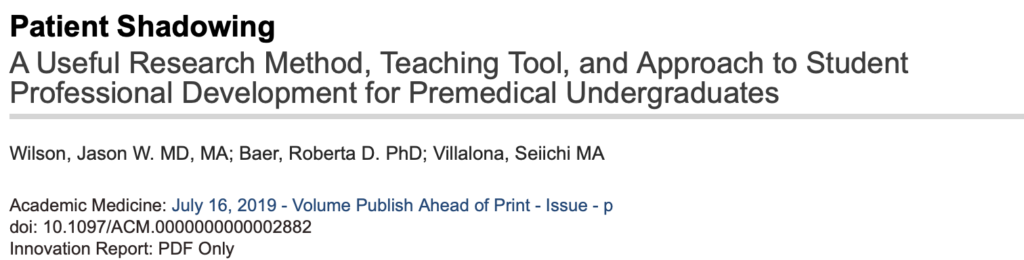
Jason Wilson, Roberta Baer and Seiichi Villalona are pleased to announce publication of our article in Academic Medicine which highlights the success we have had implementing a premed patient shadowing program that builds in a patient experience perspective into the preclinical years at the University of South Florida. The article is available for free at the Academic Medicine website.
Patient shadowing early in training allows a shift in the clinical gaze that pays off in the long game in the development of future physicians
The article is available for free at this link
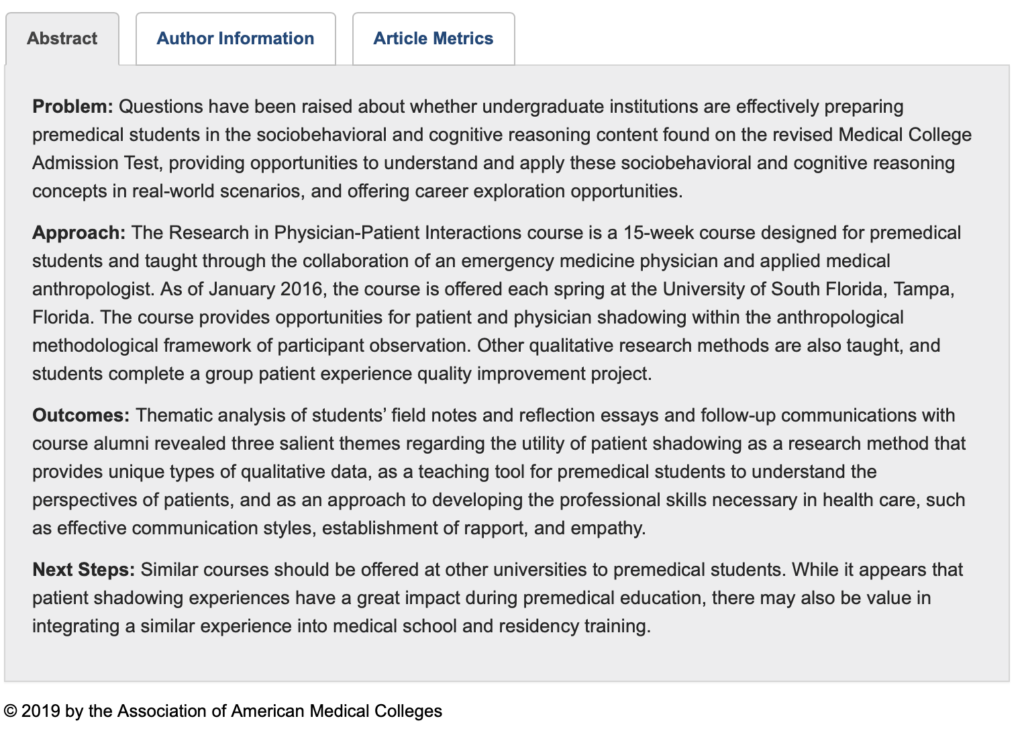
| The article is available for free at this link |
| The PubMed citation is available here and the PMID is 31335819 |
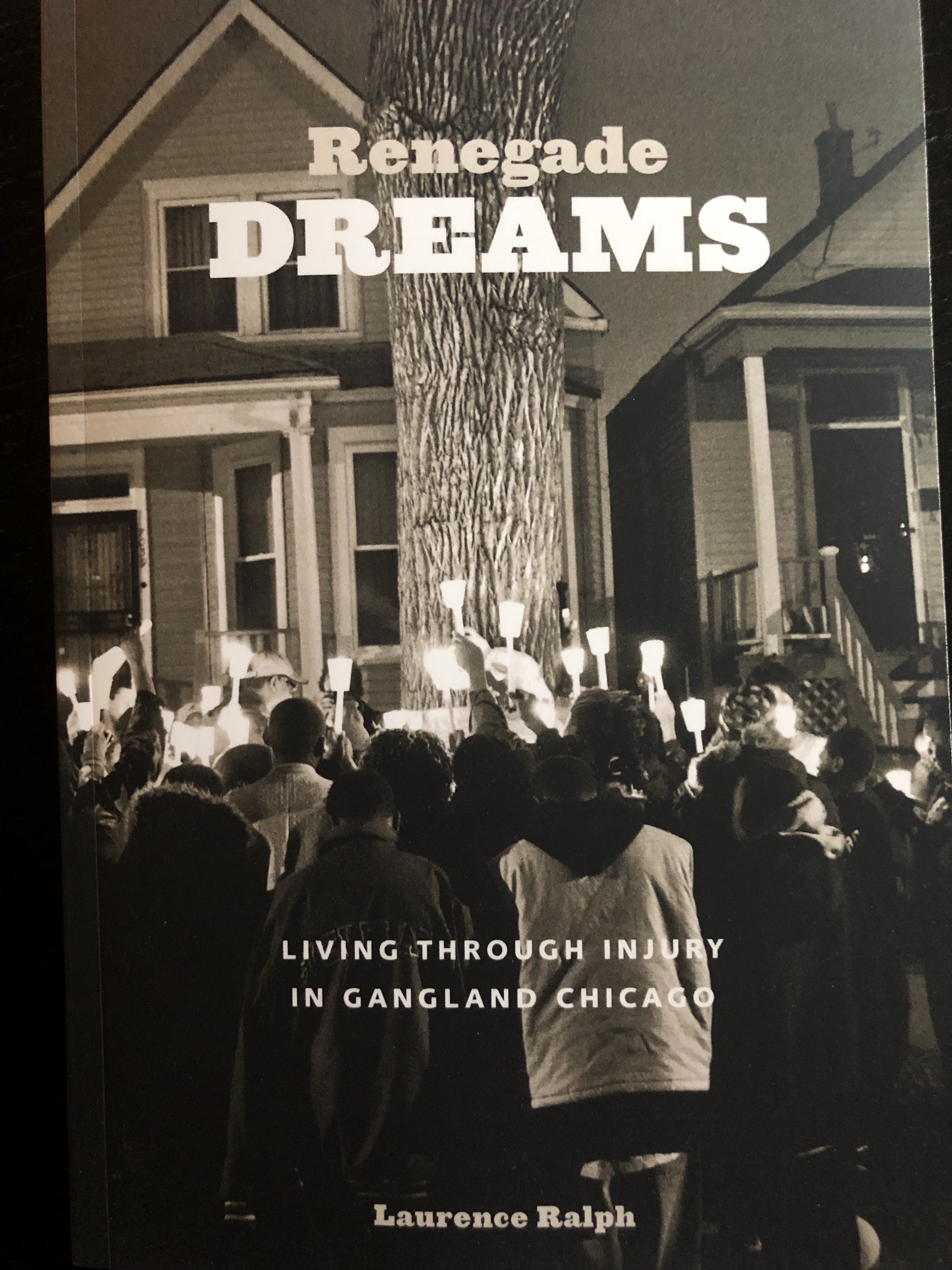
Received a copy of Renegade Dreams by Anthro Firearm Co-Panelist @Laurence_Ralph. Excited to select excerpts for @USFAnthropology course I teach in spring ANT4930 Patient-MD Interaction where we examine lived experiences of GSW patients